Cheesecake Recipes: Smooth, Crack-Free, Baked or No-Bake
Cheesecake recipes have a reputation for being temperamental, but the cracks, lumps and sunken middles come from a short list of fixable causes, not from bad luck. A cheesecake is essentially a baked custard built on cream cheese, so it follows custard rules: gentle, even heat and no rushing. Get the mixing temperature right, protect it from fierce heat, and cool it slowly, and it comes out smooth and level. This page covers baked and no-bake cheesecakes and the technique behind each. Every number here is from USDA FoodData Central, and the sweetness is real sugar, counted honestly, never a substitute.
Why Cheesecakes Crack or Go Lumpy
Lumps start cold. Cream cheese only blends smooth when it is at room temperature, so a cheesecake beaten straight from the fridge keeps little lumps that never disappear. Soften it first and beat it smooth before anything else goes in.
Cracks come from too much air and too much heat. Over-beating the batter, especially after the eggs go in, whips in air that expands and then collapses, tearing the surface. And a fierce oven sets the edges long before the centre, so the middle rises, falls and splits. The fixes are to mix the eggs in gently and just until combined, and to bake low with a buffer.
A water bath is that buffer. Setting the pan in a tray of hot water holds the oven’s heat steady and moist around the cake, so it cooks evenly rather than searing at the edge. Wrap the pan well so water cannot seep into the crust.
Stop early and cool slow. A baked cheesecake is done when the edges are set but the centre still jiggles, because it firms as it cools. Then cool it gradually, since a sudden temperature drop contracts the surface and cracks it. Many bakers turn the oven off and leave the door ajar for a while.
Classic Baked Cheesecake
The New York style is dense and tall, rich with cream cheese and eggs. It is the one that benefits most from a water bath and a slow cool, because its height means the centre takes time to set. Run a knife around the edge as it cools so the shrinking cake does not pull against the pan and tear.
No-Bake Cheesecake
A no-bake cheesecake skips the oven and sets in the fridge, firmed by whipped cream and sometimes gelatin rather than by eggs and heat. The rule shifts to the setting agent: if it uses gelatin, bloom it in cold liquid and warm it gently without boiling, because boiling weakens its set. Give it enough chilling time, since a soft, runny no-bake cheesecake is almost always one cut too soon.
Cheesecake Bars and Flavours
Baked in a tray and cut into squares, cheesecake bars cook faster and more evenly than a tall round, which makes them the most forgiving version to start with. Flavours, whether lemon, chocolate or fruit swirl, ride on the same base, so the method does not change; a fruit swirl is just a thicker fruit sauce dropped on top and drawn through with a knife.
The Crust
Most cheesecakes sit on a crumb crust bound with melted butter, and the butter is what holds it together, so too little and it falls apart, too much and it goes greasy and hard. Press it firm and even, and a short pre-bake sets it so it does not go soggy under the filling.
Keeping Water Out of the Water Bath
The water bath is the main defence against cracks, and its one weakness is leaks: water seeping through the base of a springform pan makes a soggy crust. Wrap the outside of the pan in a double layer of heavy foil, pressed tight, and for extra safety set the wrapped pan inside a roasting bag or a slightly larger solid pan before lowering it into the water. If leaks worry you, pour the hot water into a separate tray on the rack below instead, which still gives the gentle, moist heat with no risk to the crust.
Slicing a Cheesecake Cleanly
A cheesecake slices neatly only when fully chilled, so give it several hours, or overnight, in the fridge before cutting. Use a thin, sharp knife, dip it in hot water and wipe it dry between each cut, and the warm blade glides through the dense filling and leaves a clean face instead of dragging crumbs and filling across the slice.
Make-Ahead and Storage
Cheesecake is a make-ahead dessert by nature, because it needs the long chill to set anyway, and its texture is often better the day after baking. It keeps several days covered in the fridge, and it freezes well: chill it fully, freeze it whole or in slices, and thaw it in the fridge. Add any fresh fruit topping close to serving rather than before freezing, so it stays bright.
Flavour Variations
The base takes flavour easily. Lemon comes from zest and a little juice beaten into the batter, chocolate from melted chocolate or cocoa folded in, and pumpkin from puree with warm spice, which also makes the batter slightly wetter so it needs a few extra minutes. A fruit swirl is a thick fruit sauce dropped on top and drawn through with a knife before baking.
A Note on Sugar
Sugar in a cheesecake sweetens and also softens the texture of the set, balancing the tang of the cream cheese. This site uses real sugar, counted truthfully from USDA data, and never non-nutritive sweeteners, which change both taste and texture and misreport carbohydrate. For other custard-style desserts see the dessert recipes guide.
The Right Pan
Most cheesecakes are baked in a springform pan, whose removable collar lets you free the cake without flipping it, which a dense custard cake does not survive. A loose-based tart tin does a similar job for thinner cheesecakes. Whatever the pan, the water-bath precautions above apply, because the same gap that frees the cake also lets water in if it is not wrapped. A tall, narrow pan bakes more slowly in the centre than a wide, shallow one, so match the bake time to the pan rather than to the clock.
Toppings and Finishing
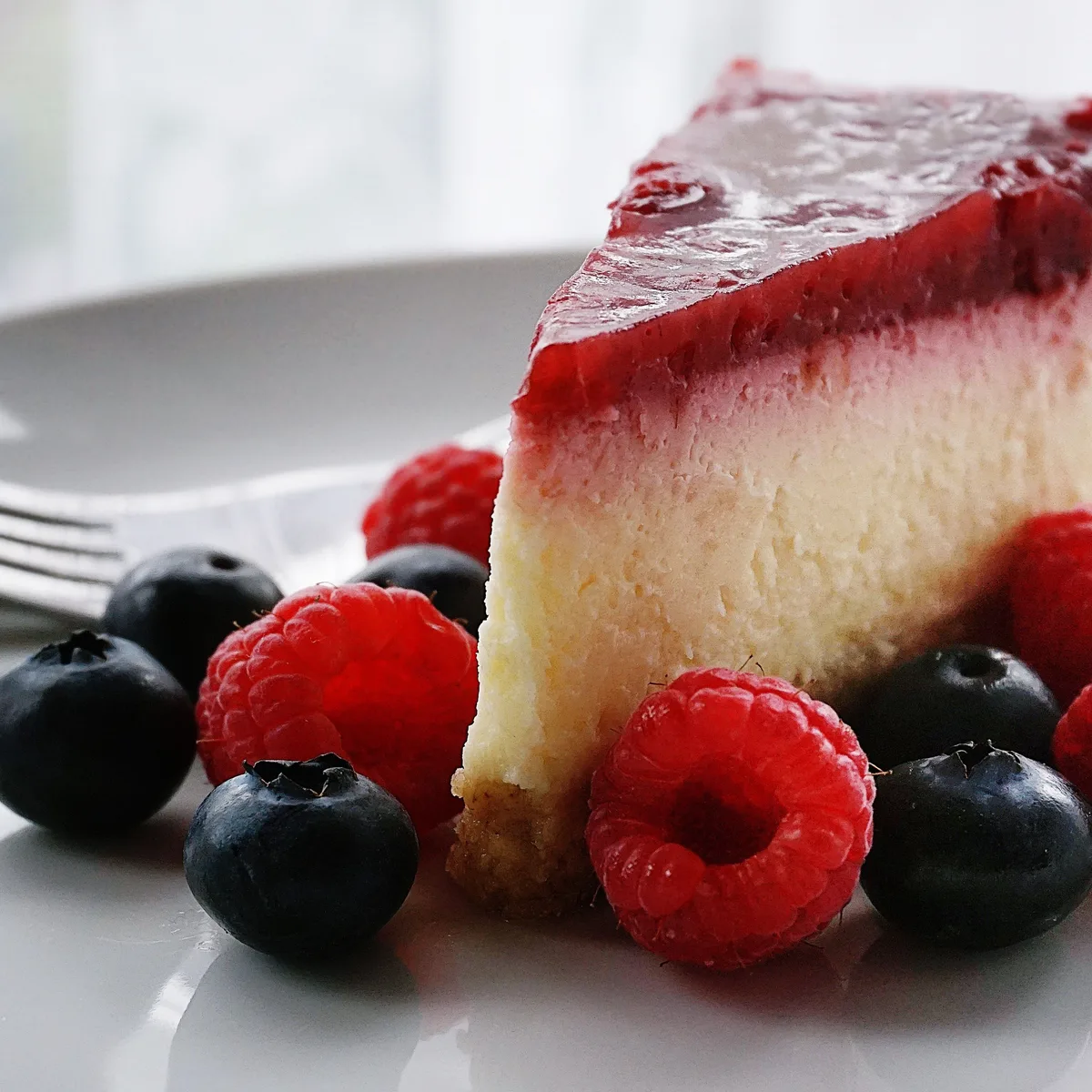
A plain cheesecake is a canvas. A glossy fruit topping is a thick fruit sauce, cooled and spooned over the set cake; a sour-cream layer spread on near the end of baking sets into a tangy finish; and a caramel or chocolate drizzle goes on just before serving. Keep wet toppings to serving time so they do not soak the surface, and if the cake is being stored or frozen, add the topping to the slice rather than the whole cake, since many toppings do not keep as well as the cake beneath. A dusting of cocoa or a handful of fresh berries needs no cooking and suits a cheesecake served the same day.
FAQ
Why did my cheesecake crack? Usually too much air beaten in, too fierce an oven, or too fast a cool. Mix the eggs in gently, bake low in a water bath, and cool slowly so the surface does not contract and split.
Why is my cheesecake lumpy? The cream cheese was too cold to blend smooth. Bring it to room temperature and beat it smooth before adding anything else.
How do I know when a baked cheesecake is done? When the edges are set but the centre still jiggles like soft jelly. It firms as it cools, so baking until the middle looks fully set overcooks it.
Why is my no-bake cheesecake runny? It was cut too soon or the setting agent was off. Give it full chilling time, and if it uses gelatin, bloom it in cold liquid and warm it without boiling, because boiling weakens the set.
Can I make cheesecake with a sugar substitute? This site does not, because sugar affects the texture of the set as well as the taste, and substitutes misreport carbohydrate. We use real sugar and count it honestly.
Where to Go Next
Start with the dessert recipes guide for the custard logic behind every cheesecake. For other sweets see cake recipes, pie recipes and no-bake desserts. For a classic baked single recipe with nutrition per slice, see the cheesecake recipe.
Written by Frank Thomson, Skillet & Spoon editorial. Every nutrition figure on this site is calculated ingredient by ingredient from the USDA FoodData Central database, never estimated and never rounded to look better. We do not publish net-carb figures or use non-nutritive sweeteners. How we develop and source recipes is set out in our editorial policy.