Flan (Caramel Custard, Set in a Water Bath)
Flan is a baked custard with a caramel top that becomes a sauce, and it is one of the most forgiving desserts in the Mexican repertoire once you understand two things: why the caramel goes rock hard and then loosens by itself, and what the pan of water is actually doing. Get those and you get a flan with a clean, dense, silky body rather than a pitted one sitting in a puddle. The recipe card carries the full method with USDA-calculated numbers, and this page explains both.
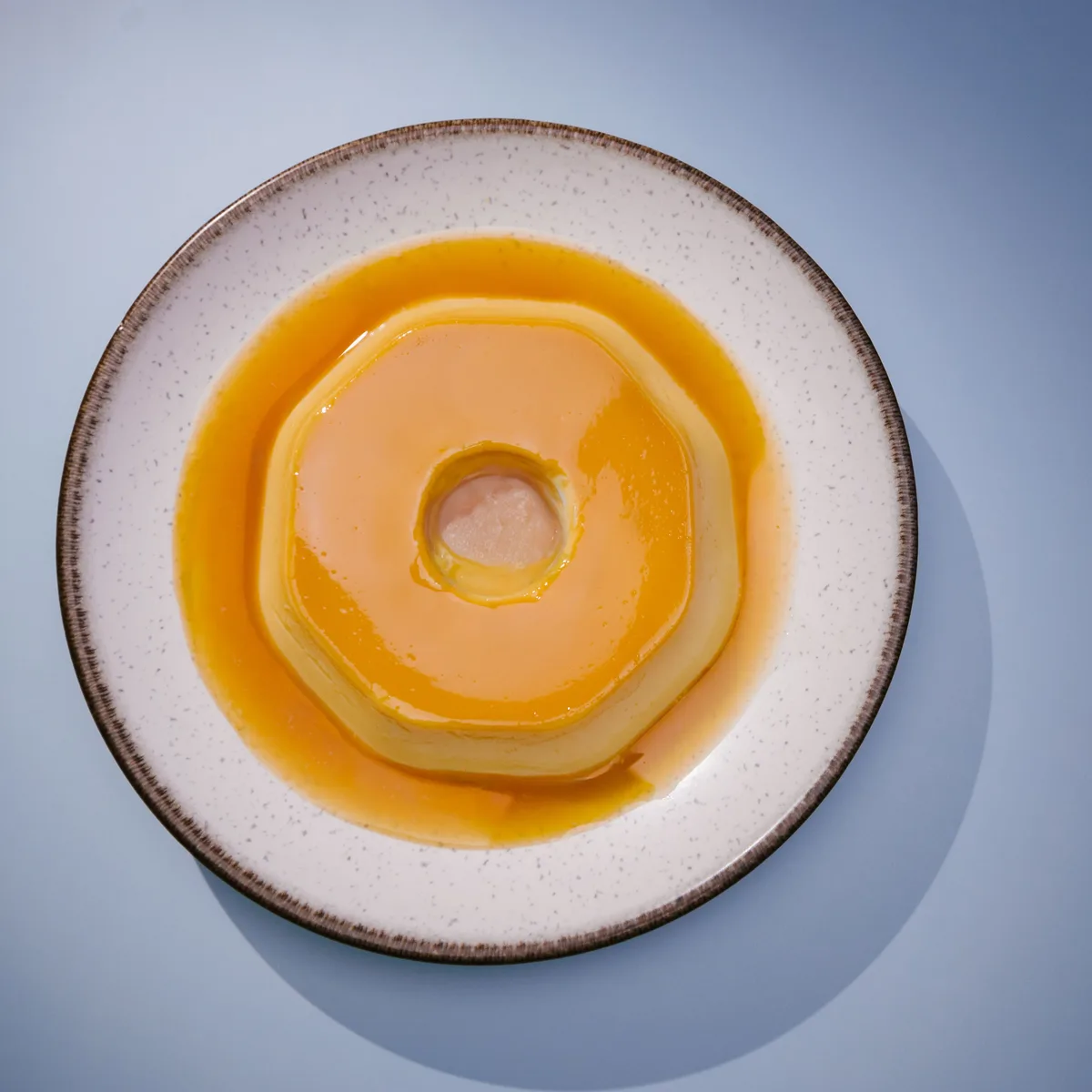
Ingredients
Method
- Heat the oven to 325F and put a kettle on. Have a deep roasting tin ready and a 9 inch round cake tin or 8 individual ramekins.
- For the caramel, put the sugar in a dry heavy pan over medium heat. Leave it alone until it starts to melt at the edges, then swirl the pan, without stirring, until it is fully liquid and the colour of an old penny.
- Pour it straight into the tin and tilt to cover the base. It will set hard within a minute, which is expected.
- Whisk the eggs just until the yolks and whites are combined, with as little foam as possible.
- Whisk in the condensed milk, evaporated milk, vanilla and salt until smooth.
- Pour the custard through a fine sieve into the caramel-lined tin. Skim off any bubbles on the surface.
- Set the tin inside the roasting tin and pour boiling water into the outer tin to come halfway up the side of the custard. Cover the whole thing loosely with foil.
- Bake 55 to 65 minutes, until the edges are set and the centre wobbles as a single mass when you nudge the tin, rather than rippling in waves.
- Lift it out of the water, cool to room temperature, then refrigerate at least 6 hours and preferably overnight.
- To serve, run a thin knife around the edge, put a plate over the tin, and invert in one confident movement.
Flan in Mexico
Custards came to Mexico with the Spanish, and flan settled in as a standard dessert across the country, sold in bakeries and served at home for every occasion. The Mexican version is typically made with condensed and evaporated milk rather than fresh cream, which is partly history and partly climate: canned milks kept where fresh milk did not, and they give the dense, sweet, slightly caramelised body that Mexican flan is known for. Flan napolitano is the same dish with cream cheese blended in, giving a firmer, cheesecake-like texture. This is the classic version.
Why This Recipe Works
- The hard caramel turns itself into sauce, given time in the fridge. Caramel poured into a tin sets into a solid sheet of sugar glass. Over several hours in the cold, it draws water out of the custard sitting on top of it, because sugar is strongly hygroscopic, and that dissolves it back into a syrup. This is why flan is chilled overnight and not served warm from the oven: the sauce has not formed yet. Nothing you do at the stove makes this faster.
- The water bath caps the temperature around the custard. Egg proteins set into a smooth gel at around 175F to 180F. Heat them much beyond that and they contract and squeeze out the water they were holding, which gives you a coarse, pitted custard weeping liquid. Surrounded by water, the outside of the dish cannot climb much above boiling point, and the custard heats slowly and evenly instead of setting hard at the edges while the middle is still liquid.
- Whisking gently and straining are what make it silky. Air beaten into the eggs becomes bubbles that bake into holes, and the chalazae, the white cords attached to the yolk, never fully break down. Whisking only until combined and then straining removes both, which is the difference between a glassy surface and a porous one.
Ingredient Notes
The milks. One can of sweetened condensed milk and one of evaporated. The condensed provides all the sugar the custard needs, so there is none in the custard itself, and its high sugar content is also why flan sets softer and richer than a plain baked custard. Because canned milks vary between brands, the note under the card says to check your own label.
The eggs. Five whole eggs for this quantity. Eggs are the only setting agent here, so the count is not flexible: fewer and it will not hold its shape when turned out, more and it firms up toward rubbery. Whole eggs rather than yolks alone give the clean, sliceable texture typical of Mexican flan.
The sugar for the caramel. Plain granulated, melted dry. Adding water makes it easier to control but takes longer to reach colour, and the result is the same once it has.
Vanilla and salt. A real vanilla extract, and a quarter teaspoon of salt, which does not make it salty but keeps the sweetness from flattening out.
The Method, In Short
Caramel into the tin, custard whisked and strained on top, water bath, 325F for about an hour, cool, chill overnight, invert. The active work is fifteen minutes and the rest is waiting.
On the caramel. Do not stir melting sugar with a spoon; agitation encourages it to crystallise into grit. Swirl the pan instead. Take it off the heat when it is deep amber, since it carries on darkening from residual heat, and a caramel taken past dark brown turns bitter. Work quickly once it is poured, because it stiffens fast.
How to Tell When It Is Done
Nudge the tin. A finished flan moves as one solid mass, with a slight wobble in the very centre; an underbaked one ripples in waves like liquid under a skin. If you use a thermometer, the centre reads about 175F. The likeliest error is overbaking, which shows up later as small holes through the body and a thin layer of liquid in the plate that is not caramel but water forced out of the eggs.
Individual Ramekins or One Big Tin
Ramekins bake in 30 to 35 minutes rather than an hour, turn out more reliably, and give everyone their own caramel. A single tin looks impressive and slices cleanly, but it needs the full chill to release properly. Either way the water bath comes halfway up the outside and the oven stays at 325F. If you are using ramekins, divide the caramel between them first and work fast, since a small amount of caramel sets almost immediately.
Unmolding Without Losing It
Chill it thoroughly, which is the real insurance. Run a thin knife right down the side of the tin, keeping it against the metal. Put the serving plate face down on the tin, hold both together, and invert in one movement rather than tilting cautiously. If the flan resists, sit the tin in an inch of hot water for 30 seconds to loosen the last of the caramel, then try again. Use a plate with a rim, because more caramel comes out than you expect.
Storage
Flan keeps four days refrigerated, covered, and it is genuinely better on the second day than the first because the caramel has had longer to become sauce. Keep it in its tin until you serve it, since an unmolded flan sitting in syrup slowly absorbs it and the surface loses its sheen. It does not freeze: ice crystals rupture the set egg gel, and the thawed custard is watery and grainy. If you need dessert well ahead, make it two days early rather than freezing it.
Why a Flan Comes Out Full of Holes
Holes are a heat problem and they come from three places, all of which you can rule out. Air whisked into the eggs bakes into bubbles, so whisk gently and skim the surface before it goes in the oven. Water that was too hot, or an oven set too high, lets the custard boil at the edges, and steam pockets leave visible tunnels. And simply baking too long past the set point makes the egg proteins contract and expel water, which is the version that also leaves liquid in the plate. The cure for all three is the same: gentle handling, a water bath, and taking it out when the centre still wobbles.
FAQ
Why is my flan caramel hard instead of saucy? It has not had long enough in the fridge. The set caramel draws water out of the custard over several hours and dissolves into syrup. Chill flan at least 6 hours, and overnight is better.
Do I have to use a water bath? Yes, if you want a smooth custard. The water keeps the outside of the dish near boiling point rather than oven temperature, so the eggs set gently instead of curdling at the edges.
How do I know when flan is done? Nudge the tin: it should move as one mass with a slight wobble in the centre. A thermometer in the middle reads about 175F. Waves and ripples mean it needs longer.
Why did my flan come out with holes? Too much air whisked in, a bath or oven that was too hot, or too long in the oven. Whisk only until combined, strain the custard, and pull it while the centre still wobbles.
Can I make flan ahead of time? Yes, and you should. It needs an overnight chill anyway and holds four days refrigerated. It does not freeze.
What is flan napolitano? The same custard with cream cheese blended into it, which gives a denser, firmer texture closer to cheesecake. The caramel and the method are unchanged.
Where to Go Next
Another milk-based classic is tres leches cake, the drink to serve beside it is horchata, and there is more sweet cooking at Mexican dessert recipes. The whole library starts at easy Mexican recipes at home.
Label note: most of the carbohydrate in this recipe comes from the sweetened condensed milk, calculated here from USDA’s generic entry. Brands vary, and some contain added sugar, so check the label on the one in your kitchen.
Written by Frank Thomson, Skillet & Spoon editorial. Every nutrition figure on this site is calculated ingredient by ingredient from the USDA FoodData Central database, never estimated and never rounded to look better. We do not publish net-carb figures or use non-nutritive sweeteners. How we develop and source recipes is set out in our editorial policy.