Beef Barbacoa (Slow Braised Chipotle Beef)
Beef barbacoa is chuck roast braised slowly in a blended sauce of chipotle, garlic, lime and warm spices until it falls apart, then shredded and returned to its cooking liquid. The shredding step is the easiest place to lose it: pulled apart on a board and served dry, the meat is fine; shredded back into the sauce and left to soak, it is excellent. The recipe card carries the full method with USDA-calculated numbers; this page explains the cut, the braise and that final soak.
Ingredients
Method
- Heat the oven to 300F. Season the beef chunks all over with the salt.
- Blend the chipotles and adobo, garlic, onion, lime juice, vinegar, cumin, oregano and cloves with 1/2 cup of the broth until smooth.
- Sear the beef in a heavy Dutch oven over high heat in batches until well browned on at least two sides, then return it all to the pot.
- Pour the chipotle mixture and the remaining broth over the beef, tuck in the bay leaves, and bring to a bare simmer on the stove.
- Cover tightly and braise in the oven for 3 1/2 to 4 hours, until the beef shreds with no resistance when pressed with a fork.
- Lift the beef out, discard the bay leaves, and skim the fat from the liquid. If the liquid is thin, simmer it uncovered for 10 minutes to reduce.
- Shred the beef with two forks and return it to the pot, tossing it in the liquid for a few minutes so it absorbs the sauce before serving.
Barbacoa, Traditional and Adapted
Traditional barbacoa is a method more than a recipe. In central Mexico, particularly Hidalgo, it means lamb or goat wrapped in maguey leaves and cooked for hours in a covered pit. In northern Mexico and South Texas it has long meant beef head, especially cheek, cooked the same slow way. The chuck roast braised with chipotle in a Dutch oven, popularised in the United States by taco shops and restaurant chains, is a home adaptation of that idea. This page makes that adaptation and says so plainly. What it keeps from the original is the principle: tough, collagen-rich meat, cooked low and covered until it surrenders.
Why This Recipe Works
- Chuck works because of what makes it tough. Chuck is a heavily worked shoulder muscle threaded with connective tissue. Cooked fast, that tissue stays rubbery. Held at a gentle braise for hours, the collagen in it converts to gelatin, which is what makes the shredded meat feel moist and gives the liquid body. Lean cuts do not have enough collagen to convert, so they come out dry and stringy no matter how long they cook.
- The covered oven gives steady, even heat. A 300F oven surrounds the pot with gentle heat from all sides, which keeps the liquid at a slow simmer rather than a boil. A hard boil on the stove tightens the muscle fibres and squeezes moisture out of them, so the meat can be falling apart and dry at the same time.
- Shredding back into the liquid is the finishing step. When the braised meat is pulled apart, all those new surfaces are exposed. Tossed back into the warm sauce and left for a few minutes, they absorb it. Shredded on a board and served straight, the same meat dries out on the way to the table.
Ingredient Notes
The chipotles. Chipotles are smoke-dried jalapenos, and canned in adobo they come in a tangy, tomato-and-vinegar sauce. Three chiles plus a spoon of the sauce gives a clear smoky heat without taking over. The heat builds as the braise goes on, so start with two if you are unsure and add the third next time.
The acid. Lime juice and cider vinegar together keep a long, rich braise tasting bright rather than heavy. The vinegar holds up through the long cook; the lime adds a fresher note.
The warm spices. Cumin, oregano and a small amount of clove. Clove is strong, and a quarter teaspoon across three pounds of beef is background, not flavour you can pick out.
The broth. Just one cup. The beef releases a lot of its own liquid as it cooks, and a covered pot loses very little to evaporation. More liquid at the start dilutes the sauce and leaves you reducing it for a long time at the end.
The Method, In Short
Blend the sauce, sear the beef hard, combine, bring to a bare simmer, then braise covered in a low oven for about four hours. Shred the meat, skim and reduce the liquid if it needs it, and toss the beef back in to soak. Nearly all of the time is hands-off.
Slow Cooker and Pressure Cooker
Slow cooker. Sear the beef and blend the sauce on the stove first, since a slow cooker does not brown. Cook on low for 8 to 9 hours. Cut the broth to half a cup, because a slow cooker lid seals tightly and almost nothing evaporates.
Pressure cooker. Sear using the saute setting, add the sauce and just half a cup of broth, and cook at high pressure for about 60 minutes with a natural release. Nothing evaporates under pressure, so the liquid will be thin; simmer it down afterward.
What to Serve It With
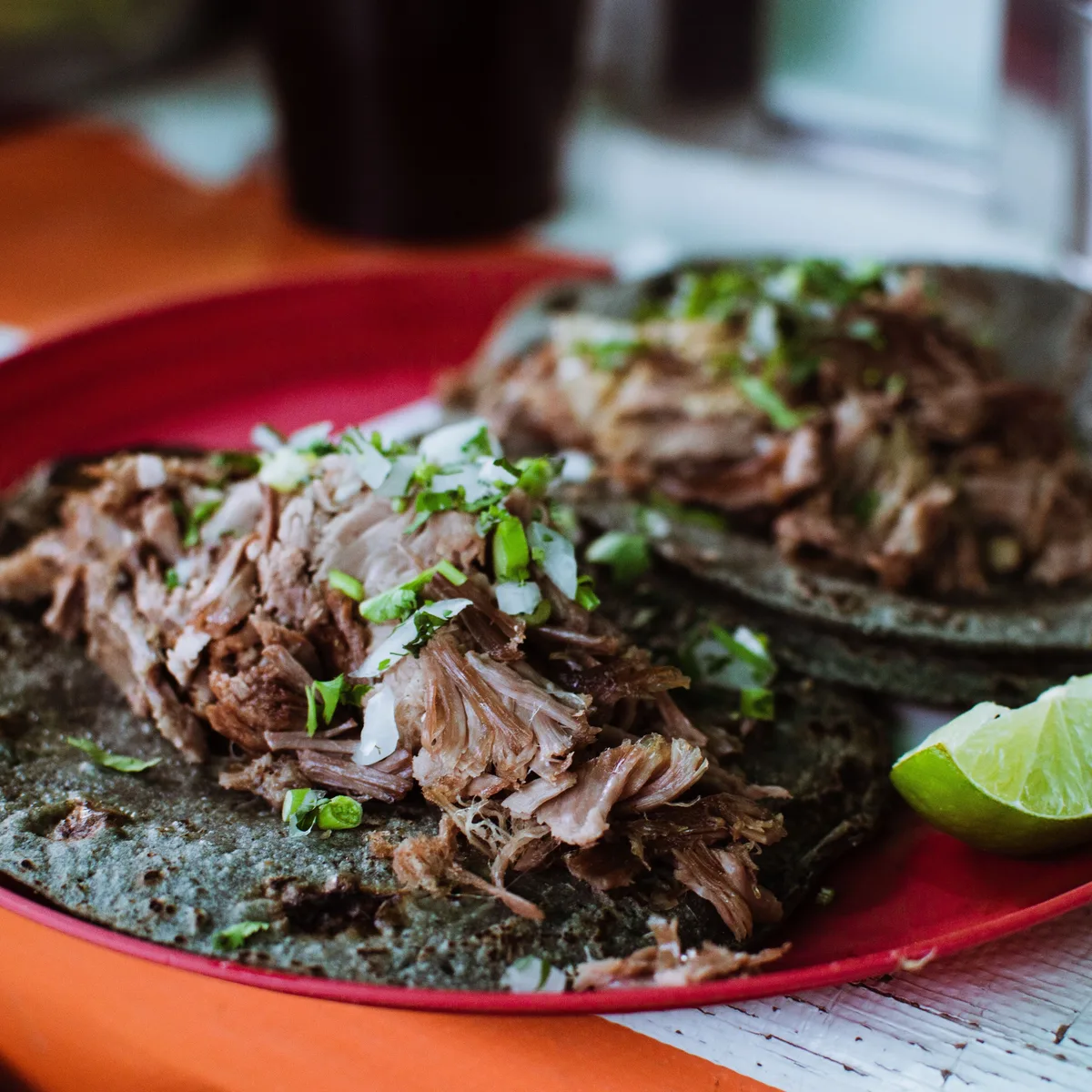
Barbacoa goes into corn tortillas with diced white onion, chopped cilantro and lime, which is the classic taco. It also fills burritos and bowls, tops nachos, and makes an excellent torta filling. Serve it with salsa verde for acid and refried beans or authentic Mexican rice alongside. For more long-cooked beef, see Mexican beef recipes and Mexican crock pot recipes.
Storage and Reheating
Barbacoa is better on the second day, after the meat has spent a night in its juices. It keeps four days refrigerated and freezes for three months; freeze it with plenty of the liquid so it does not dry out. Reheat gently, covered, in a pan with a splash of the liquid or broth. The fat that sets on top in the fridge lifts off easily if you want a leaner result.
FAQ
What cut of beef is best for barbacoa? Chuck roast is the easiest to find and works very well. Beef cheek is the traditional northern Mexican and Texan choice and is even richer. Brisket also works. All three are high in connective tissue, which is the point.
Is barbacoa spicy? Moderately, from the chipotles. Use two chiles instead of three and skip the extra adobo sauce for a milder version. The heat increases as it braises, so taste the finished sauce before adding more.
What is the difference between barbacoa and birria? Both are slow-cooked chile braises. Barbacoa leans on smoky chipotle and is usually served drier, shredded into its sauce. Birria is built on dried guajillo and ancho chiles and served with its broth as a consome. See birria tacos.
Why is my barbacoa dry? Either the cut was too lean, the braise boiled instead of simmering, or the meat was shredded and served without going back into the liquid. Use chuck, keep it at a bare simmer, and toss the shredded beef in the sauce before serving.
Can I make barbacoa ahead? Yes, and it improves. Make it a day ahead, refrigerate it in its liquid, lift off the set fat, and reheat gently.
Where to Go Next
The chile-broth cousin is birria tacos, the pork equivalent is Mexican pork recipes, and the whole library starts at easy Mexican recipes at home.
Nutrition note: values are calculated from USDA FoodData Central. Where USDA has no exact entry, the closest catalog item is used and named here: chipotle peppers in adobo was calculated as “Sauce, peppers, hot, chili, mature red, canned”.
Written by Frank Thomson, Skillet & Spoon editorial. Every nutrition figure on this site is calculated ingredient by ingredient from the USDA FoodData Central database, never estimated and never rounded to look better. We do not publish net-carb figures or use non-nutritive sweeteners. How we develop and source recipes is set out in our editorial policy.