Diabetic Smoothie Recipes for Weight Loss Goals: 8 Light Builds
Diabetic smoothie recipes for weight loss is a search with a promise built into it, so this page starts by declining the promise: no smoothie causes weight loss, and any page claiming otherwise is selling something. What a smoothie can honestly be is light, filling, fully counted and genuinely pleasant, so that if you and your care team have set goals of your own, the glass in your hand is working with your plan instead of quietly against it. That honest version of the job is what these eight builds do.
Every one follows the vegetable-first template from our main diabetic smoothie recipes page, tuned lighter: water-forward pours, cottage cheese and Greek yogurt doing the satiety work, fruit measured as a voice rather than a volume, and every card counted to the glass from USDA data.
What “Lighter” Means Here, Specifically
Three design moves separate this page from its parent, and they are stated so you can apply them to any blend you invent. The pour leans water: water or half-water-half-almond-milk, trimming the base to nearly nothing. The fruit is measured, not poured: a half-cup of berries by the cup measure, not by enthusiasm. And the protein stays full strength: cottage cheese and Greek yogurt hold their full role, because a light glass that does not hold you until lunch just relocates the morning’s eating rather than lightening it. Light, in this page’s vocabulary, means light in the glass and heavy in the holding.
The Eight Builds
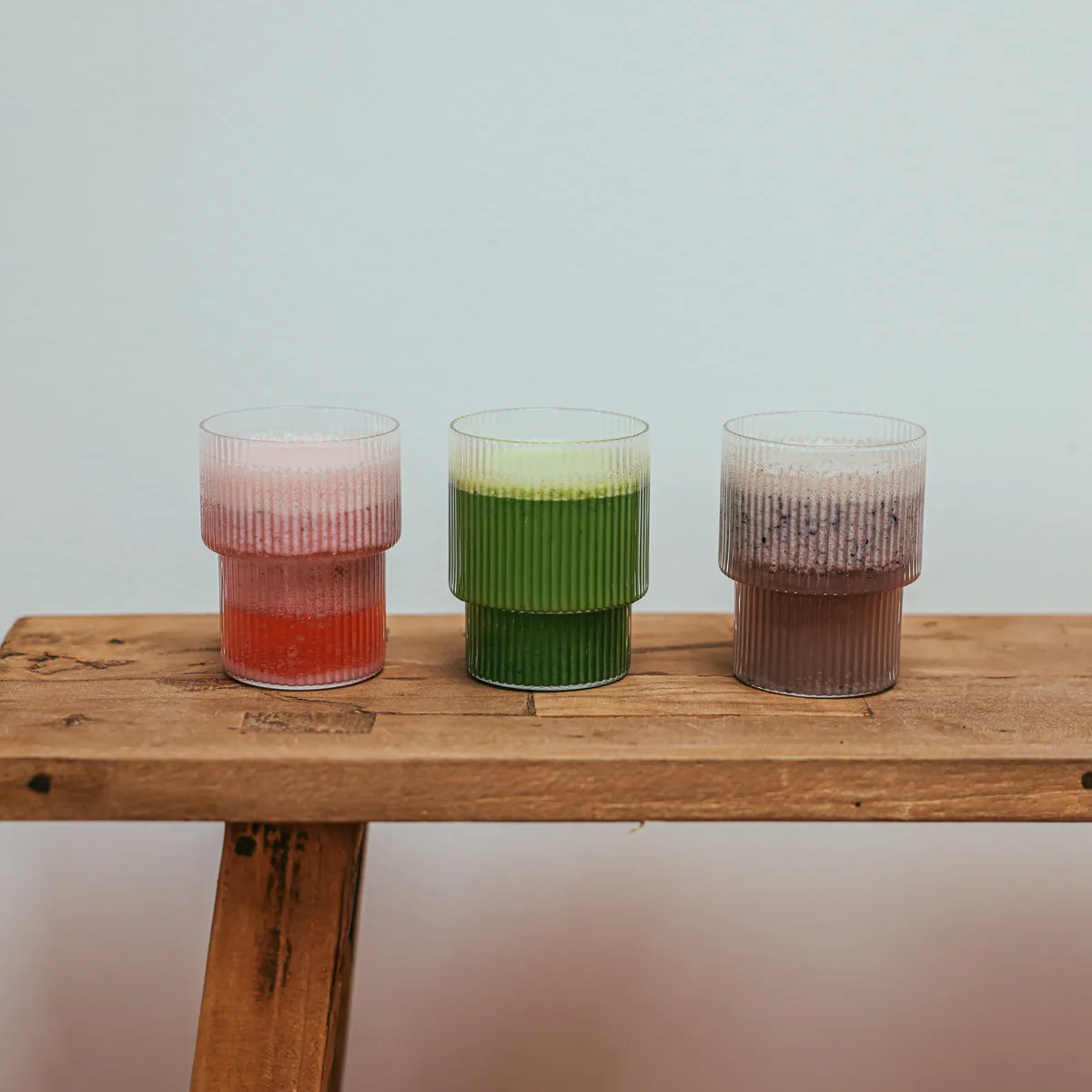
Cucumber green cooler. Cucumber, spinach, half a green apple, lime, water. The lightest glass this section publishes, and the one that tastes most like a garden.
Raspberry cottage cheese. Raspberries, cottage cheese, vanilla, water-forward pour. The lowest-sugar berry blend on either smoothie page, with cheesecake manners.
Strawberry cucumber. Strawberries and cucumber sharing the body, Greek yogurt beneath, lime over. Summer’s answer, twice as refreshing as it reads.
Green tea berry. Cooled unsweetened green tea as the pour, mixed berries, Greek yogurt, chia. The tea carries flavor at zero everything, the template’s cleverest pour swap.
Spinach citrus. Spinach, half an orange, cottage cheese, water base. Bright and vegetal in the right proportions.
Blueberry flax, light build. The fiber leader from the main page with the pour switched to half water and the berries measured. Holds like a meal; weighs like a snack.
Cocoa yogurt frosty. Unsweetened cocoa, Greek yogurt, ice, a splash of almond milk, blended thick enough to spoon. The dessert-craving answer, counted in full.
Melon mint. Cantaloupe kept to a measured half-cup, cucumber, mint leaves, lime, water. The glass to hand someone who claims light cannot taste like anything.
The Serving Honesty Section
This page repeats its parent’s discipline louder, because the search that brought you here raises the stakes on it. The serving is the glass, defined per card in pre-blend cup measures, and the card counts that glass, not a hopeful fraction of a pitcher. Blending makes over-pouring effortless and invisible, which is exactly why every recipe here makes the pour visible again. If a build gets doubled, its numbers double, and the card’s arithmetic travels with it. None of this tells you what your numbers should be; it guarantees the numbers you are working with are real, which is the only contribution a recipe page can honestly make to anyone’s goals.
Making These Part of a Real Morning
The freezer-pack system from the main smoothie page applies unchanged: Sunday portioning, labeled bags, sixty morning seconds. Two additions earn their place here. First, pair the lightest builds, the cooler and the melon mint, with something to chew, a boiled egg or a cheese stick, on mornings when the glass is breakfast rather than beside it; holding power is the whole design, and the chew helps it. Second, the green tea pour batch-brews: a pitcher of unsweetened green tea in the fridge turns that build into the week’s default at zero added effort. Light formats survive on the same logistics as every other habit this site documents; the glass that is already half-prepped is the glass that actually happens.
How the Numbers Work
Every card counts the complete blend from USDA data with source IDs archived, per the editorial policy: no net carbs, no unverifiable sweetener lines, fruit at its real values, the glass as the serving. What those numbers should add up to across your day is precisely the conversation this page keeps pointing back to your care team, because that is where it belongs. Our lane is honest glasses; yours and your team’s is what to do with them.
Reading Smoothie Marketing With Clear Eyes
Because this page’s search term lives in a marketing minefield, one section on reading the field. Bottled and franchise smoothies marketed around weight frequently carry more fruit sugar per container than the dessert page of this entire section, spread across serving-size fine print that assumes you will share a bottle you will not share. The three questions that cut through any label or menu: what is the pour, how much total fruit, and is the protein real or a powder’s promise. Ask them of the eight builds above and the answers are printed on each card; ask them at a counter and the silence is informative. We name no brands and audit no menus; we just note that a homemade glass whose every gram came from the USDA database answers questions that marketing departments are paid to blur, and that the sixty seconds the template costs is the price of never having to wonder.
The same clear-eyed reading applies to this page itself, which is why its first paragraph declines its own search term’s promise. Trust built on declined promises is the only kind this section deals in.
Why Cooled Tea Beats Plain Water
Use cooled green tea where a recipe says water. Water thins a smoothie without giving anything back, so a lighter glass tastes like a smaller version of a bigger one. Tea brings its own tannin and a faint bitterness, and bitterness reads to the palate as something deliberate rather than something missing. Mint does the same job from the herb side for the cost of a garnish. That is the whole difference between a light drink that tastes designed and one that tastes subtracted, and it costs almost nothing.
FAQ
Will these smoothies help me lose weight? No food causes weight loss, and this page will not pretend otherwise. These are light, filling, fully counted glasses; whether and how they fit a weight goal is a plan you build with your care team, using numbers we promise are honest.
How are these different from the main smoothie page? Water-forward pours, measured fruit, full-strength protein: lighter in the glass, identical in the template. The main page is the default; this is its lighter register.
Can I replace meals with these? Meal structure is a clinical question for your care team, not a recipe site. What we can say: these were designed as breakfasts with holding power, and the pairing advice above exists for the mornings a glass needs backup.
Why is there no sweetener in any of these? Per the section’s standing policy: we publish only USDA-verifiable numbers, so sweetness comes from measured fruit, and the builds are designed to need nothing else. The full reasoning is in our editorial policy.
Which one first? The green tea berry: it teaches this page’s signature move, the flavored zero-cost pour, so once you taste why tannin reads as deliberate where water reads as missing, you can apply the swap to every other build.
Where to Go Next
The full template and the richer builds live at diabetic smoothie recipes, the rest of the morning at diabetic breakfast recipes, and the section’s foundations at the diabetic recipes pillar.
Written by Frank Thomson, Skillet & Spoon editorial. Every nutrition figure on this site is calculated ingredient by ingredient from the USDA FoodData Central database, never estimated and never rounded to look better. We do not publish net-carb figures or use non-nutritive sweeteners. How we develop and source recipes is set out in our editorial policy.