Chilaquiles Verdes (Crisp, Not Mush)
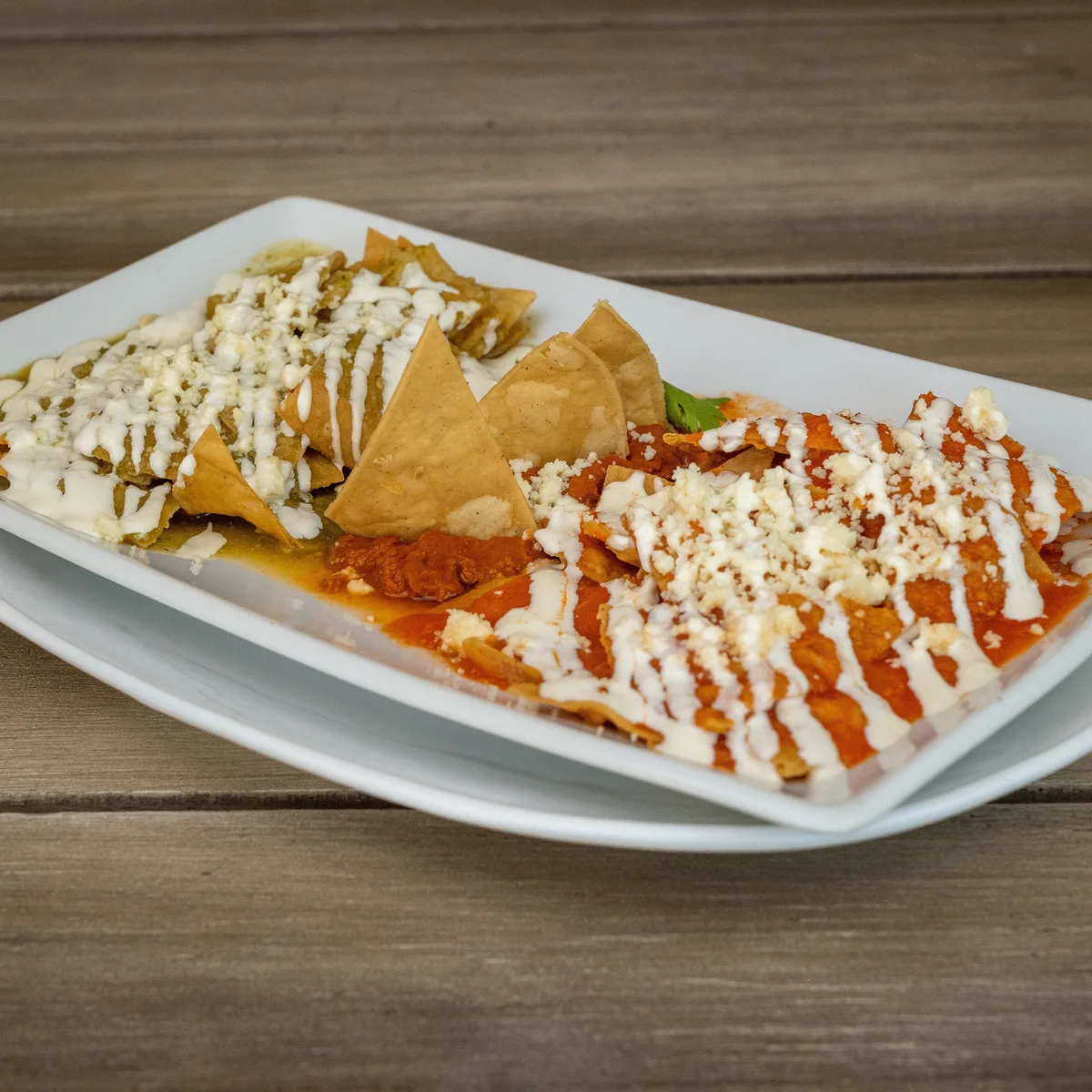
Chilaquiles are fried tortilla chips simmered briefly in salsa and topped with egg, cheese and crema, and they are breakfast across Mexico. The entire dish is a timing problem: the chips have to meet the sauce late enough to stay crisp and early enough to take on flavour. The recipe card carries the full method with USDA-calculated numbers; this page is mostly about that window.
Ingredients
Method
- Cut the tortillas into sixths and fry them in the oil in batches over medium-high heat until crisp and lightly golden, about 2 minutes a batch. Drain on paper and salt them lightly.
- Broil the tomatillos, serranos, onion half and garlic on a tray until blistered and blackened in patches, about 6 to 8 minutes, turning once.
- Blend the roasted vegetables with the cilantro and the salt until smooth.
- Heat a tablespoon of the frying oil in a wide skillet, pour in the salsa, and fry it for 4 to 5 minutes, stirring, until it darkens and thickens.
- Add the broth and simmer 5 minutes, until the sauce coats a spoon but still pours.
- Fry the eggs in a separate pan to your liking.
- Turn the heat under the salsa to low. Add the chips and fold them through for 30 to 60 seconds, no longer, until they are coated but still have bite.
- Serve immediately, topped with a fried egg, crumbled queso fresco, a drizzle of sour cream and raw onion rings.
Why This Recipe Works
- Day-old tortillas fry crisper. A fresh tortilla holds more water, and water has to boil off before the surface can crisp, so fresh ones absorb more oil on the way to the same result. Tortillas left out overnight are drier to begin with and fry lighter and crunchier. This is the traditional reason chilaquiles exist: they are what yesterday’s tortillas become.
- Frying the salsa concentrates it. Pouring the blended salsa into hot oil and cooking it down drives off raw water and browns the sugars, which deepens the flavour. It is the same freír la salsa step behind chicken tortilla soup, and skipping it leaves a thin, sharp sauce that tastes raw.
- Thirty to sixty seconds, then the plate. The chips go in at the very end and get folded, not simmered. Past a minute the starch in the tortilla has absorbed enough sauce to go soft in the middle, and there is no way back from that.
How Crisp Should They Be?
There is a genuine disagreement about chilaquiles here, and both sides are traditional. Some cooks want the chips barely coated, still audibly crunchy, eaten fast. Others want them softened through to something closer to a savoury pudding, a style sometimes made with more sauce and a longer rest. The recipe here targets the first, because it is the harder one to get right and the easier one to walk back: if you want them softer, leave the pan on the heat another minute. Going the other direction is impossible.
Ingredient Notes
The tortillas. Corn, cut into sixths, ideally a day or two old. Fry them yourself if you can; bagged chips are thicker, saltier and already stale in a different way, and they go soggy faster because they have been sitting. If you do use bagged, choose the thickest restaurant-style ones.
What the card counts. The oil is counted in full, but most of a shallow-frying panful stays in the pan rather than on the food. USDA has no entry for what a fried piece actually absorbs, and putting a figure on it would mean estimating, which this site does not do. So read the fat and calorie numbers as the ceiling rather than the plate.
The salsa. Verde here, from roasted tomatillos and serranos, which is the version the green name refers to. Chilaquiles rojos, made with a red chile and tomato salsa, are equally traditional and work with the same method; use enchilada sauce loosened with broth.
The toppings. Queso fresco, crema or sour cream, and raw onion rings. All three are cold and go on at the table, which is deliberate: they cool the hot chips, add tang against the acidic sauce and give texture. A fried egg on top makes it a full breakfast; shredded chicken folded in makes it dinner.
The broth. A cup, to loosen the fried salsa to a coating consistency. Without it the salsa is too thick and grabs the first chips it touches instead of coating all of them evenly.
The Method, In Short
Fry the chips, roast and blend the salsa, fry the salsa down, loosen it with broth, then fold in the chips for under a minute and serve at once. Everything except the last step can be done ahead.
Get everyone to the table before the chips go in. Chilaquiles do not hold, and a plate that waits five minutes is a different dish from the one that left the pan.
Chilaquiles, Migas and Nachos
These three get confused and the differences are simple. Chilaquiles are chips simmered in salsa. Migas, in the Tex-Mex sense, are chips scrambled into eggs, so the egg is mixed through rather than sitting on top. Nachos are chips baked or layered under melted cheese and eaten with fingers. Same starting ingredient, three different dishes, and only chilaquiles is built around a sauce.
Storage
Chilaquiles are not a leftovers dish; the chips continue to soften in the fridge and reheat to a uniform mush. What does keep is the components. The salsa keeps a week refrigerated and freezes for three months, and the fried chips keep two or three days in a sealed container at room temperature, which makes a second batch a five minute job. Store them separately and assemble fresh, always.
FAQ
How do I keep chilaquiles from going soggy? Fold the chips into the sauce for thirty to sixty seconds at the very end, off a hard boil, and serve straight away. Fry your own chips from day-old tortillas, which start drier and hold up better.
Can I use bagged tortilla chips? Yes, and it is the common shortcut. Use thick, restaurant-style chips, because thin ones collapse almost on contact. Freshly fried tortillas stay crisp noticeably longer.
What is the difference between chilaquiles and migas? Chilaquiles are tortilla chips simmered in salsa with the toppings added on. Tex-Mex migas are tortilla pieces scrambled into the eggs themselves.
Red or green? Both are traditional. Verde is made with tomatillos and is brighter and more acidic; rojo uses dried red chiles and tomato and is deeper and slightly sweeter. The method is identical.
Can I make chilaquiles ahead? Make the salsa and fry the chips ahead, then combine only at the last moment. An assembled plate does not keep.
What do I serve on top? A fried or scrambled egg, crumbled queso fresco, crema or sour cream, raw onion rings, sliced avocado and cilantro. Shredded chicken turns it into a dinner.
Where to Go Next
The green sauce on its own is salsa verde, the same fried-salsa technique drives chicken tortilla soup, more morning dishes are at Mexican breakfast recipes, and the whole library starts at easy Mexican recipes at home.
Label note: most of the carbohydrate in this recipe comes from the corn tortillas, calculated here from USDA’s generic entry. Brands vary, and some contain added sugar, so check the label on the one in your kitchen.
Written by Frank Thomson, Skillet & Spoon editorial. Every nutrition figure on this site is calculated ingredient by ingredient from the USDA FoodData Central database, never estimated and never rounded to look better. We do not publish net-carb figures or use non-nutritive sweeteners. How we develop and source recipes is set out in our editorial policy.