Tres Leches Cake (Soaked, Never Soggy)
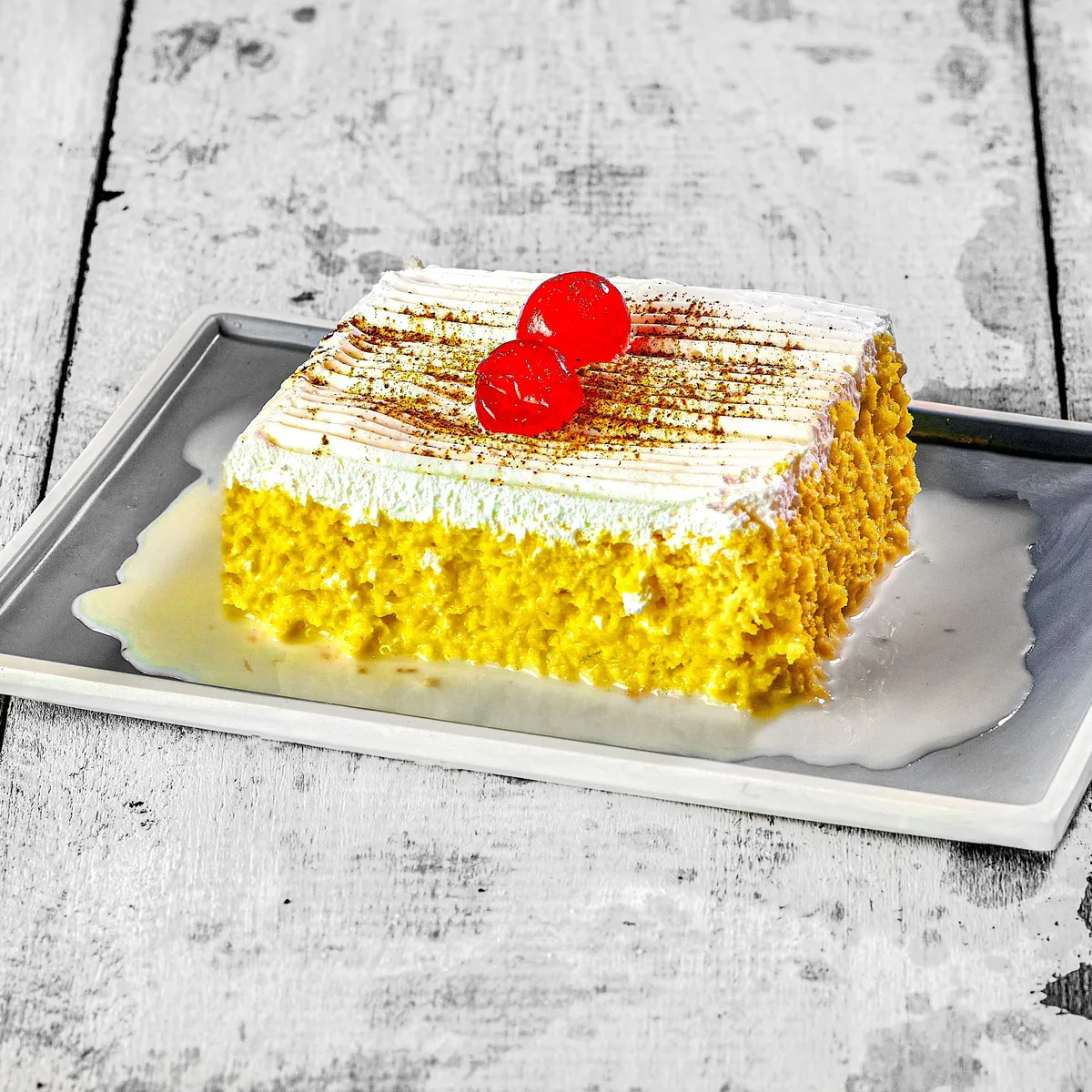
Tres leches cake is a sponge soaked in three milks, chilled until the liquid is fully absorbed, and topped with whipped cream. The whole dish turns on one question: how does a cake absorb that much liquid without collapsing into pudding? The answer is in how the sponge is built and when it meets the milk. The recipe card carries the full method with USDA-calculated numbers; this page explains both.
Ingredients
Method
- Heat the oven to 350F and grease a 9×13 baking dish. Whisk the flour, baking powder and salt together.
- Beat the egg yolks with 3/4 cup of the sugar until pale and thick, then stir in the whole milk and vanilla.
- In a clean bowl, whip the egg whites to soft peaks, add the remaining 1/4 cup sugar, and continue to stiff, glossy peaks.
- Fold the flour mixture into the yolk mixture, then fold in the whites in three additions, stopping the moment the streaks disappear.
- Pour into the dish and bake 25 to 30 minutes, until a skewer comes out clean and the top springs back.
- Whisk the evaporated milk, sweetened condensed milk and 1/2 cup of the heavy cream together.
- Pierce the warm cake all over with a fork, then pour the milk mixture over it in three stages, waiting a few minutes between each so it soaks in rather than pooling.
- Cover and refrigerate at least 4 hours or overnight. Before serving, whip the remaining cream and spread it over the top.
Why This Recipe Works
- The eggs, not butter, build the structure. This is a sponge, and the whipped whites fold in air that sets into an open, elastic crumb full of small holes. That open network is what holds liquid. A dense butter cake has a tight crumb sealed with fat, and fat repels the milk, which is why butter-based cakes sit in a puddle instead of drinking it.
- A warm cake absorbs; a cold one resists. Pour the milk over while the cake is still warm and the liquid moves into the crumb readily, because the starch is still soft and the air pockets are still open. A fully cooled cake takes it far more slowly and the soak sits on top.
- Three pours, not one. Poured all at once the milk floods the surface and runs to the bottom of the dish, leaving the top dry and the base swimming. Three pours a few minutes apart let each one disappear into the crumb before the next arrives.
Ingredient Notes
The three milks. Evaporated milk, sweetened condensed milk and cream. Evaporated brings concentrated dairy flavour without extra sugar, condensed brings the sweetness and the syrupy body, and the cream softens the whole mixture. Condensed milk is where most of the sugar in this cake lives, and it is where the carbohydrate on the card is concentrated, so the note under the card says to check your own can.
The eggs. Five, separated. Separating is not optional here: the whipped whites are the leavening that makes the crumb open enough to soak. Cold eggs separate more cleanly, but whites whip to greater volume at room temperature, so separate them straight from the fridge and let the whites sit out while you work.
The flour. Plain all-purpose. Cake flour gives a softer crumb but a weaker one, and a weak crumb is exactly what turns to mush under a pint of milk. All-purpose is the more forgiving choice here.
The topping. Whipped cream, sweetened lightly or not at all, since the cake beneath it is already sweet. A dusting of ground cinnamon is traditional in many Mexican homes, and fresh fruit on top is common.
The Method, In Short
Whip the yolks with most of the sugar, whip the whites with the rest, fold the flour and the whites into the yolks, bake, pierce while warm, soak in three stages, chill for hours, then top with whipped cream.
Folding matters. The whites are the only leavening in the cake, so every stroke that knocks air out costs you crumb structure. Cut down through the middle with a spatula, sweep along the bottom of the bowl and turn the mixture over, rotating the bowl as you go, and stop as soon as the last streak vanishes.
Why It Has to Rest
The chill is not about serving it cold. When the milk mixture first goes on, most of it is sitting in the large air channels of the sponge rather than inside the starch itself. Over several hours in the fridge, that liquid migrates into the crumb and the starch takes it up and holds it, which is why a properly rested tres leches slices cleanly with a wet, even crumb instead of leaking milk onto the plate. Four hours is the minimum and overnight is better. You can see the difference in the dish: cut a corner after an hour and liquid runs into the gap, and cut the same cake the next morning and the gap stays dry.
Traditional or Not
Tres leches is genuinely traditional across Mexico and much of Latin America, and several countries claim its origin; the honest position is that it is a widespread Latin American cake rather than the invention of one place. What is often added in the United States is a cake mix shortcut and a whipped topping from a tub. Both work. The version here is made from scratch because the sponge is doing structural work that a boxed mix, built for a moist butter-style crumb, does less well.
Storage
Tres leches keeps four days covered in the fridge and is at its best on day one and two. It does not freeze: the soaked crumb turns to mush as the ice crystals break the structure that took up all that milk. Add the whipped cream topping on the day you serve it rather than at the start, since whipped cream weeps as it stands.
FAQ
Why is my tres leches cake soggy instead of moist? Usually the cake was too dense to hold the milk, or the milk went on all at once. Whip the egg whites separately for an open crumb, pour the soak in three stages, and give it at least four hours in the fridge.
Can I use a boxed cake mix? Yes, and many people do. Box mixes are built for a moist, tight, butter-style crumb, so they absorb less and can get heavy. If you use one, cut the soak back by about a quarter.
How long does it need to soak? Four hours minimum, overnight ideally. The liquid needs time to move from the air pockets into the starch, and that is what gives an even crumb rather than a wet bottom.
What are the three milks? Evaporated milk, sweetened condensed milk and cream. Some versions use whole milk in place of the cream, which makes a lighter, less rich soak.
Can I make it dairy-lighter? Not meaningfully; the three milks are the dish. You can use whole milk instead of cream in the soak for something a little lighter, but the cake is a rich dessert by design.
Why did my sponge collapse? Either the whites were over-whipped to a dry, grainy stage and could not stretch, or the batter was stirred rather than folded and lost its air before it reached the oven.
Where to Go Next
More sweets from this kitchen are at Mexican dessert recipes, the drink that belongs beside them is horchata, and the whole library starts at easy Mexican recipes at home.
Written by Frank Thomson, Skillet & Spoon editorial. Every nutrition figure on this site is calculated ingredient by ingredient from the USDA FoodData Central database, never estimated and never rounded to look better. We do not publish net-carb figures or use non-nutritive sweeteners. How we develop and source recipes is set out in our editorial policy.