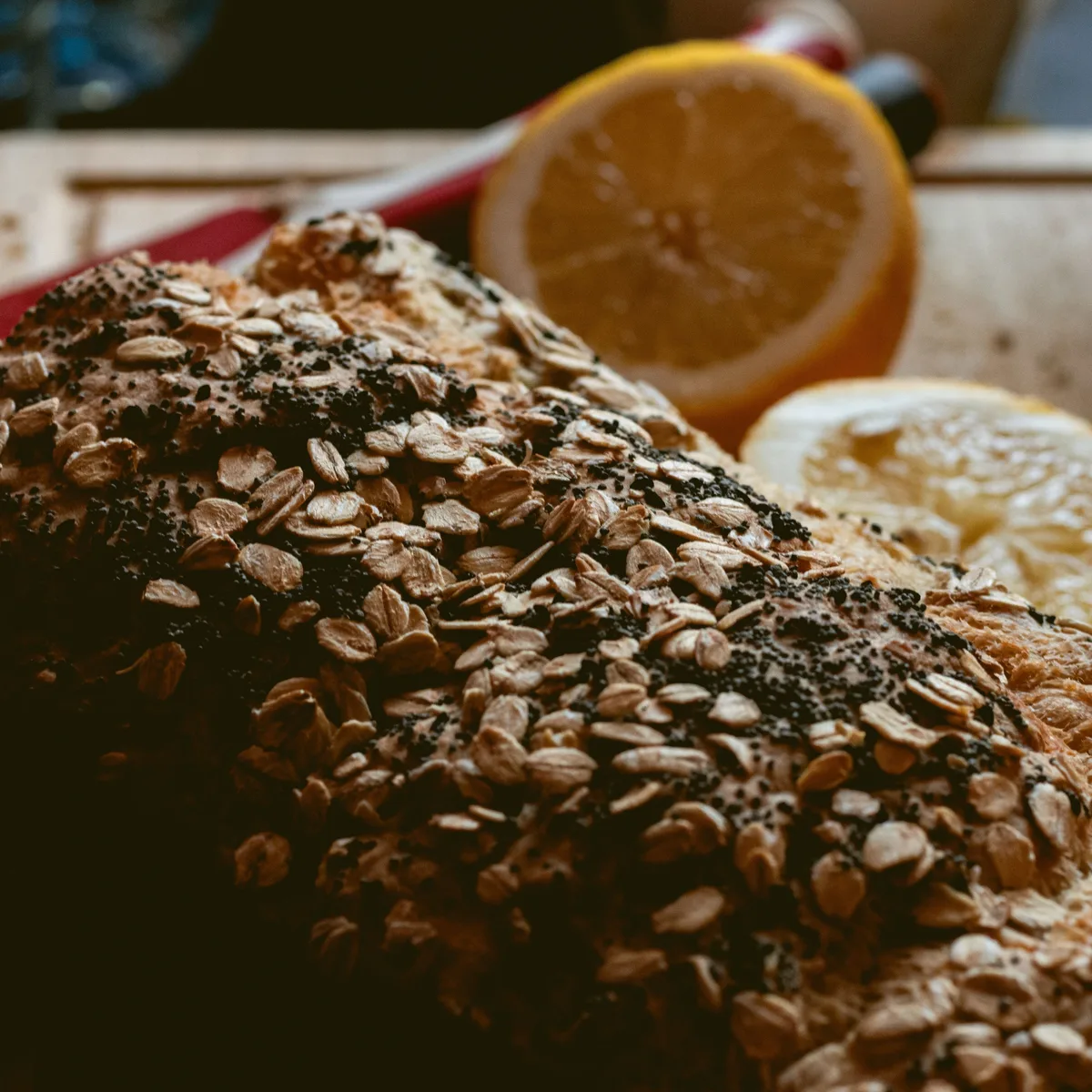
9 Diabetic Bread Recipes Worth Heating the Oven For
Diabetic bread recipes attract more wishful labeling than any other search in this section, and this page opens by clearing the counter. Bread is flour, and flour is counted. What a home oven can honestly change is everything else: whole grains instead of stripped ones, seeds and nuts building real structure, slices weighed and stated instead of guessed, and a loaf whose ingredient list you wrote yourself. That turns out to be a lot, and the nine bakes below prove it without a single unverifiable claim on a card.
The house rule here is the same one that runs our diabetic pasta recipes page: the scale is the referee. Every card states its loaf’s total and its per-slice weight, because “a slice” is the least standardized unit in any kitchen.
Three Skills Before the First Loaf
Weigh the flour. A cup of flour scooped hard packs a third more than a cup spooned light, which swings both the bake and the card. Grams end the argument; every recipe below is written by weight.
Trust the internal temperature. Lean yeast loaves are done at 200F to 205F inside; enriched and quick breads at 195F to 200F. Color lies through dark flours and seeded crusts, but a thermometer through the base does not. An underbaked whole grain loaf reads gummy no matter how brown its top looks.
Let it cool completely. A hot loaf is still baking; steam is still setting the crumb. Cutting early smears the interior into dough and convinces bakers their loaf failed when only their patience did. Two hours on a rack for the yeast loaves, one for the quick breads.
The Yeast Loaves
Seeded whole wheat sandwich loaf, 4 hours, mostly waiting. The page’s flagship: whole wheat flour, sunflower, flax and sesame seeds, yeast, salt, water and a spoon of honey that feeds the rise and is counted like everything else. The seeds are structural, adding bite and richness that white sandwich bread never argues for. Knead until the dough passes the windowpane stretch, rise until doubled, bake at 375F to 200F internal.
Overnight no-knead whole grain boule, 30 minutes of work across a day. Flour, water, salt, a pinch of yeast, eighteen hours on the counter, then a hot covered pot at 450F. The covered pot traps the loaf’s own steam and produces a crackling crust no home oven achieves uncovered. The long ferment builds flavor that fast bread cannot fake.
Whole wheat pita, 2 hours. Small rounds rolled thin and baked at 475F on a preheated steel or inverted sheet pan, where they balloon in ninety seconds. The pocket only forms above real heat; a timid oven makes crackers. Watching the first one inflate is the most fun this page offers.
Rye and caraway pan loaf, 4 hours. Half rye, half whole wheat, caraway seeds, molasses by the counted spoon. Rye doughs are sticky by nature and punish added flour with a dry crumb; wet hands beat more flour every time. Dense, aromatic, and the natural home of the smoked salmon breakfast.
The Quick Breads
Oat and yogurt soda bread, 70 minutes. Oats ground in the blender, whole wheat flour, Greek yogurt, baking soda, one egg. Mixed in five minutes, baked in fifty, no rise to wait for. The crumb is tender and scone-adjacent, and the loaf is honest about being a same-day bread that stales by the third morning.
Zucchini walnut loaf, 75 minutes. Grated zucchini squeezed hard, whole wheat flour, walnuts, cinnamon, sweetened by ripe banana and counted raisins rather than a sugar pour, per the house sweetness policy. The squeeze is the recipe: unsqueezed zucchini bakes a wet seam through the loaf’s middle that no extra time fixes.
Pumpkin seed cornbread, 45 minutes. Real cornmeal, whole wheat flour, buttermilk, toasted pumpkin seeds, baked in a preheated cast iron pan so the edge fries golden on contact. Cornmeal is corn and the card counts it; what this version skips is the cake-level sugar most modern cornbreads carry.
The Flatbreads
Skillet flatbreads, 40 minutes. Whole wheat flour and Greek yogurt kneaded three minutes, rested twenty, rolled thin and blistered in a dry cast iron pan two minutes a side. They puff, char in spots and fold without cracking, which makes them the house vehicle for the fajita and shawarma builds elsewhere in this section.
Seeded oat crispbread, 50 minutes. Oats, flax, sesame, sunflower and pumpkin seeds bound with water and olive oil, rolled thin between parchment, baked at 350F until deeply golden and snapped into shards. The seeds are most of the story here, and the crack of a properly baked sheet is the doneness test. It keeps two weeks in a tin, which nothing else on this page can say.
Storing and Freezing the Work
Home bread carries no preservatives, which is the point and also the deadline. The yeast loaves hold two to three days at room temperature cut side down on a board, and the refrigerator is the one place bread must never go: fridge temperatures accelerate staling several-fold, turning a day-old loaf into a week-old one overnight. The freezer, by contrast, is bread’s honest pause button.
The house method is slice-then-freeze, the same day the loaf finishes cooling. Slice the whole loaf, freeze the slices flat on a sheet pan for an hour, then bag them with the air pressed out. Individual frozen slices release one at a time, toast straight from frozen in barely longer than fresh, and mean the per-slice weights on the card stay exactly as stated instead of drifting with a squashed, half-thawed loaf and a struggling knife. A whole frozen boule, for comparison, needs hours on the counter and stales fast once thawed.
The crispbread is the storage champion at two weeks in a tin, the flatbreads reheat from frozen in a dry pan in ninety seconds, and the quick breads freeze better as slices than they keep as loaves. Three months is the honest ceiling for everything; label the bags.
How the Numbers Work
Every card counts its full formula ingredient by ingredient from USDA FoodData Central, source entries archived, per our editorial policy. The loaf’s total is stated, the slice count is stated, and the per-slice numbers follow from arithmetic you can check, with total carbohydrates and fiber always separate and never netted. Honey, molasses, raisins and cornmeal appear at their true values. No card on this page borrows a number from a label we cannot verify, which is also why no recipe here imitates the specialty breads whose claims live outside the USDA database.
Why Weight and Cooling Decide the Loaf
Two variables decide these loaves more than any other. The first is weight: a cup of whole wheat flour scooped hard packs meaningfully more than one spooned light, enough to move a loaf’s card and to swing the crumb from open to brick, which is why every formula here is written in grams rather than cups. The second is cooling. A loaf cut while still hot is still setting, because the steam trapped in the crumb has not finished its work; the knife smears the interior into dough and gums the slice. The same loaf left to cool fully slices clean, because the starches have set. Weight is not fussiness and patience is not optional; both are part of the recipe.
FAQ
Can bread be part of eating this way at all? That question belongs to you and your care team; this page’s job is different. It makes every loaf’s arithmetic visible, weighed and checkable, so whatever decision you make together is made with real numbers instead of label optimism.
Why bake instead of buying? Ingredient control and slice honesty. A home loaf contains exactly what you weighed into it, and your card states what a slice of it holds. The store aisle’s most confident health claims sit on the labels hardest to verify.
What about breads made with alternative flours? Almond flour appears across our baking section where it genuinely works, counted from its USDA entry. What this page avoids is any formula whose signature ingredient has no verifiable USDA basis, because a card we cannot stand behind does not get published.
My whole wheat loaves come out dense. Why? Usually underhydration or an underdone rise. Whole grain flours drink more water than white, so a proper dough feels tackier than white-bread intuition expects, and it wants a full doubling before the oven. The thermometer settles the third suspect: pull at 200F inside, not at golden outside.
Which bake first? The skillet flatbreads. Forty minutes start to finish, no oven, no proofing schedule, and they teach dough feel with instant feedback. Then the no-knead boule, which trades effort for time and rewards it.
Where to Go Next
The pasta page shares this one’s weigh-everything spine at diabetic pasta recipes, breakfast ideas that meet these loaves live at diabetic breakfast recipes, and the whole section starts from the diabetic recipes pillar.
Written by Frank Thomson, Skillet & Spoon editorial. Every nutrition figure on this site is calculated ingredient by ingredient from the USDA FoodData Central database, never estimated and never rounded to look better. We do not publish net-carb figures or use non-nutritive sweeteners. How we develop and source recipes is set out in our editorial policy.